Back to 2026 Abstracts
25 Years of Active Surveillance for Prostate Cancer: Is There an Increased Burden of Treatment in Those Who Progress?
Noa Ferziger, BA, Lampros Pantazis, MD, Rajveer Kaur, BS, Emily Huang, MD, Keyan Salari, MD, PhD, Adam S. Feldman, MD, MPH.
Massachusetts General Hospital, Boston, MA, USA.
BACKGROUND: Many men opt for active surveillance (AS) of prostate cancer hoping to avoid treatment risks and side effects. Data are limited on treatment burden in those who ultimately transition to treatment.
METHODS: We analyzed baseline risk, treatment modality, and outcomes for patients in our AS database with diagnosis between 1996 - 2022 and minimum 1 year follow up.
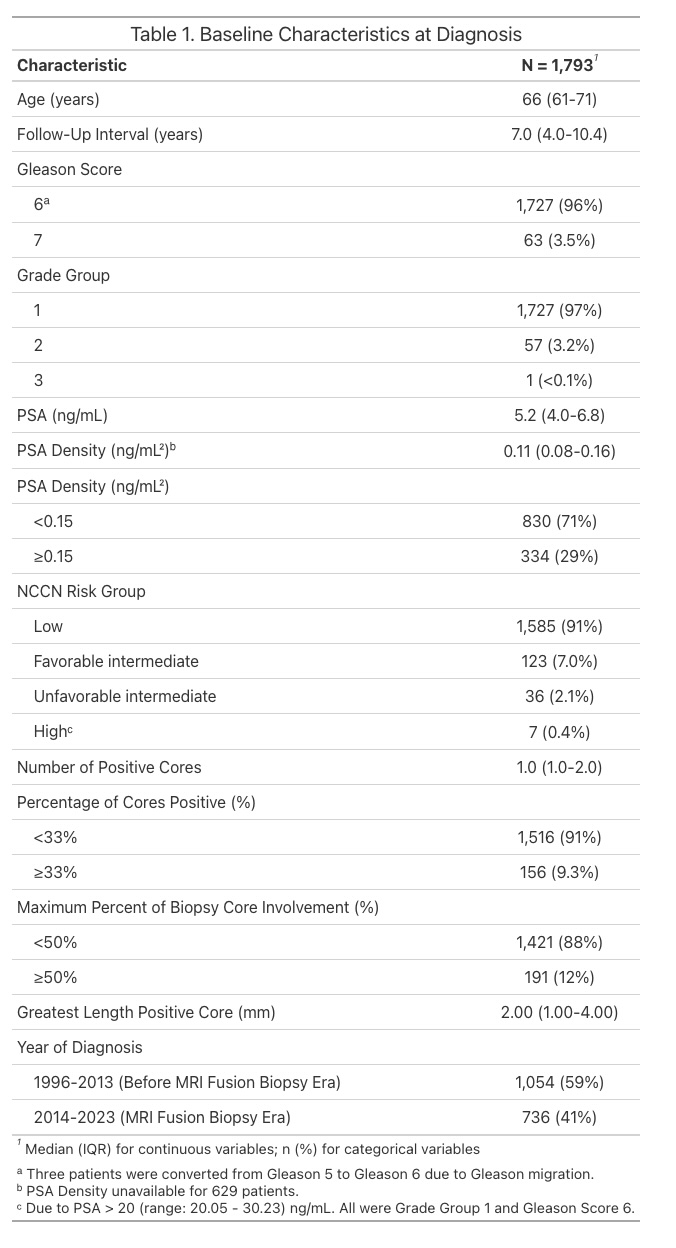
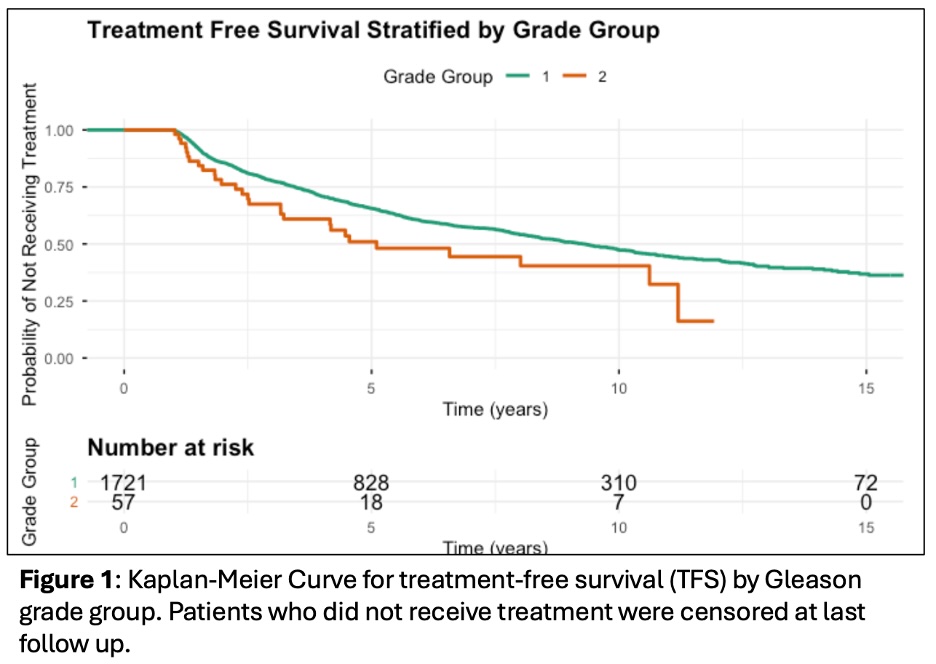
RESULTS: 1793 patients met selection criteria (Table). 5- and 10-year treatment-free survival (TFS) rates were 65.6% and 47.3% for GG1 and 51.0% and 40.4% for GG2 (Figure).
Patients progressed to treatment due to grade progression (60%, 469), volume progression (18%, 140), PSA progression (9.6%, 75), patient-driven (4.6%, 36), radiographic progression (3.5%, 27), and metastasis (1.5%, 12).
Treatment modalities were radical prostatectomy (40%, 314), radiation (27%, 209), radiation with androgen deprivation therapy (ADT) (19%, 144), brachytherapy (8%, 62), and ADT alone (5.1%, 40). 39.5% (118) of baseline low-risk patients who ultimately underwent radiation received concomitant ADT.
For patients with metastases at first treatment (12, 0.8%), baseline risk was low (91.7%, 11) or favorable intermediate (8.3%, 1). Mean time to treatment was greater for patients with metastases at first treatment than without. (7.3 vs 4.1 years, p = .002).
CONCLUSIONS: Half of men on AS ultimately progress to treatment, with some undergoing higher intensity treatment than would have been needed at diagnosis. Identifying the inflection point at which curative treatment can occur without increased burden of treatment is important in the future of AS management.
Back to 2026 Abstracts


