Back to 2026 Abstracts
Prognostic Significance of PSA Density Within 2026 NCCN Risk Stratification System After Radical Prostatectomy
Abdullah Salama, BS1, Tara McLaughlin Proto, PhD2, Ilene Staff, PhD2, Kevin Pinto, BS2, Laura Olivo Valentin, BS2, Joseph Tortora, MS2, Joseph Wagner, MD2.
1UConn Health, Farmington, CT, USA, 2Hartford Healthcare, Hartford, CT, USA.
BACKGROUND: The 2026 NCCN Prostate Cancer Guidelines eliminated PSAD density (PSAD) as a risk factor for "very low-risk" vs. "low-risk" disease and merged these strata into a single group. We evaluated whether PSAD differentiates oncological outcomes after radical prostatectomy (RP) using the current 2026 NCCN risk stratification system.
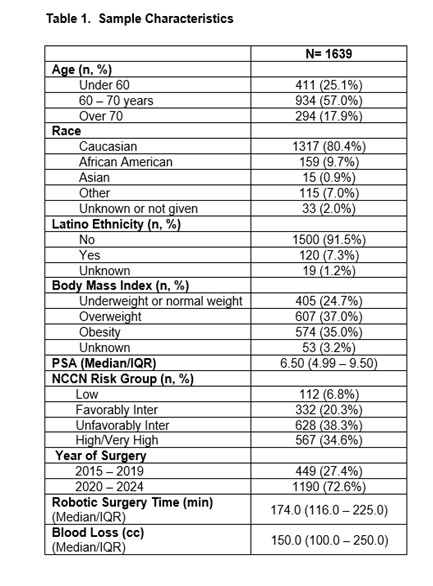
METHODS: We retrospectively identified patients who underwent primary RP at our institution from 01/01/15 through 12/31/24 and classified them into five risk groups based on 2026 NCCN criteria: low, favorable intermediate, unfavorable intermediate (UIR), high, and very high (Table 1). PSAD was calculated using preoperative PSA and biopsy-derived prostate volumes. Risk groups were compared on 2-year biochemical recurrence (BCR), positive surgical margins (PSM), and adverse stage or grade pathology based on high or low PSAD (>0.15 ng/mL/g vs. ≤0.15 ng/mL/g).
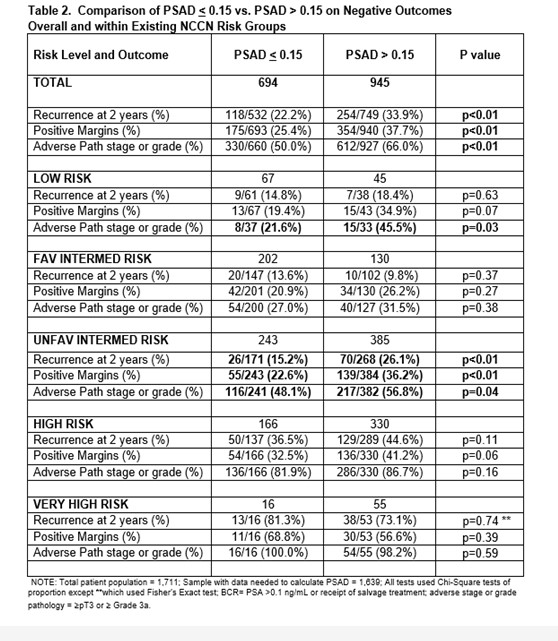
RESULTS: Among 1,639 patients with sufficient data needed to calculate PSAD, those with PSAD >0.15 had higher rates of two-year BCR, PSM and adverse pathology (Table 2). PSAD was significantly associated with adverse pathology in the low-risk group and with all three outcomes for UIR. No other significant differences were observed.
CONCLUSIONS: PSAD identifies low risk and UIR patients with significantly worse oncologic outcomes suggesting that including it in risk stratification for some NCCN groups may provide actionable prognostic information. Incorporation of PSAD into risk assessment for low-risk and UIR disease warrants consideration.
Back to 2026 Abstracts


