Back to 2026 Abstracts
Use of Nerve Protector Sheath During Robotic Assisted Laparoscopic Prostatectomy Not Associated with Improved Patient Reported Erectile Function or Continence - A Single Center, Single Surgeon Retrospective Review
Austin Freedman, BS, Rutul Patel, MD, Theodoros Karanikola, BA, Pedro Maria, MD.
Albert Einstein College of Medicine, NEW YORK, NY, USA.
BACKGROUND: Nerve protector (NP) sheaths are implantable devices used in orthopedic and neurologic surgeries to improve post-operative neuronal recovery and function. Following robotic-assisted laparoscopic prostatectomy (RALP), erectile dysfunction (ED) and incontinence are debilitating side effects attributed to neurovascular bundle damage. This study investigates whether rates of ED and incontinence following RALP are lower in patients who had NPs placed.
METHODS: We retrospectively reviewed patients who underwent nerve-sparing RALP (nsRALP) between January 2000 and August 2024 with a single surgeon. NPs were used starting October 2022. Clinical, surgical, and demographic variables, along with self-reported ED and incontinence at 6 and 12 months, were extracted. Patients without at least 1 year of post- operative follow-up, or who had surgeries for ED or lower urinary tract symptoms prior to RALP were excluded.
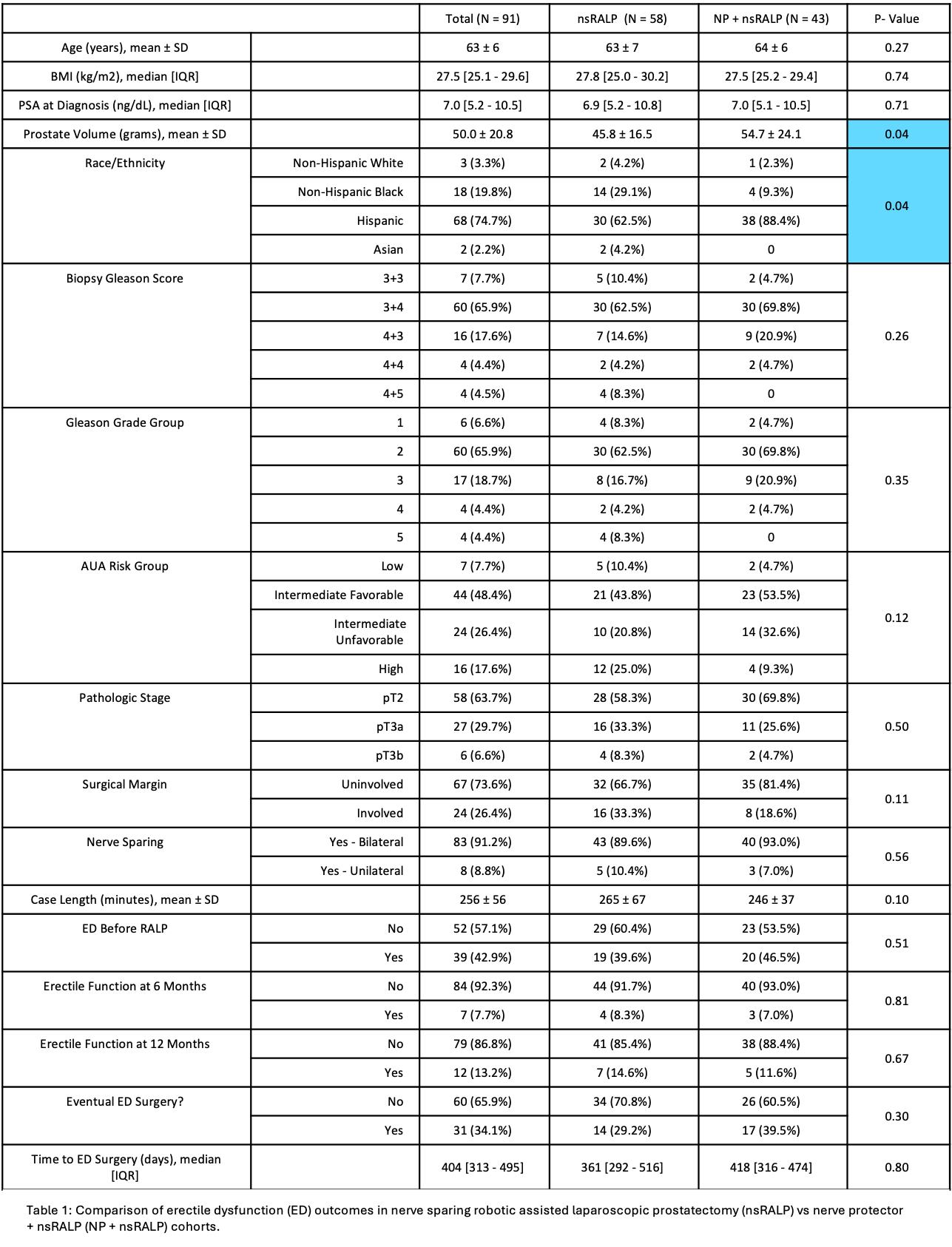
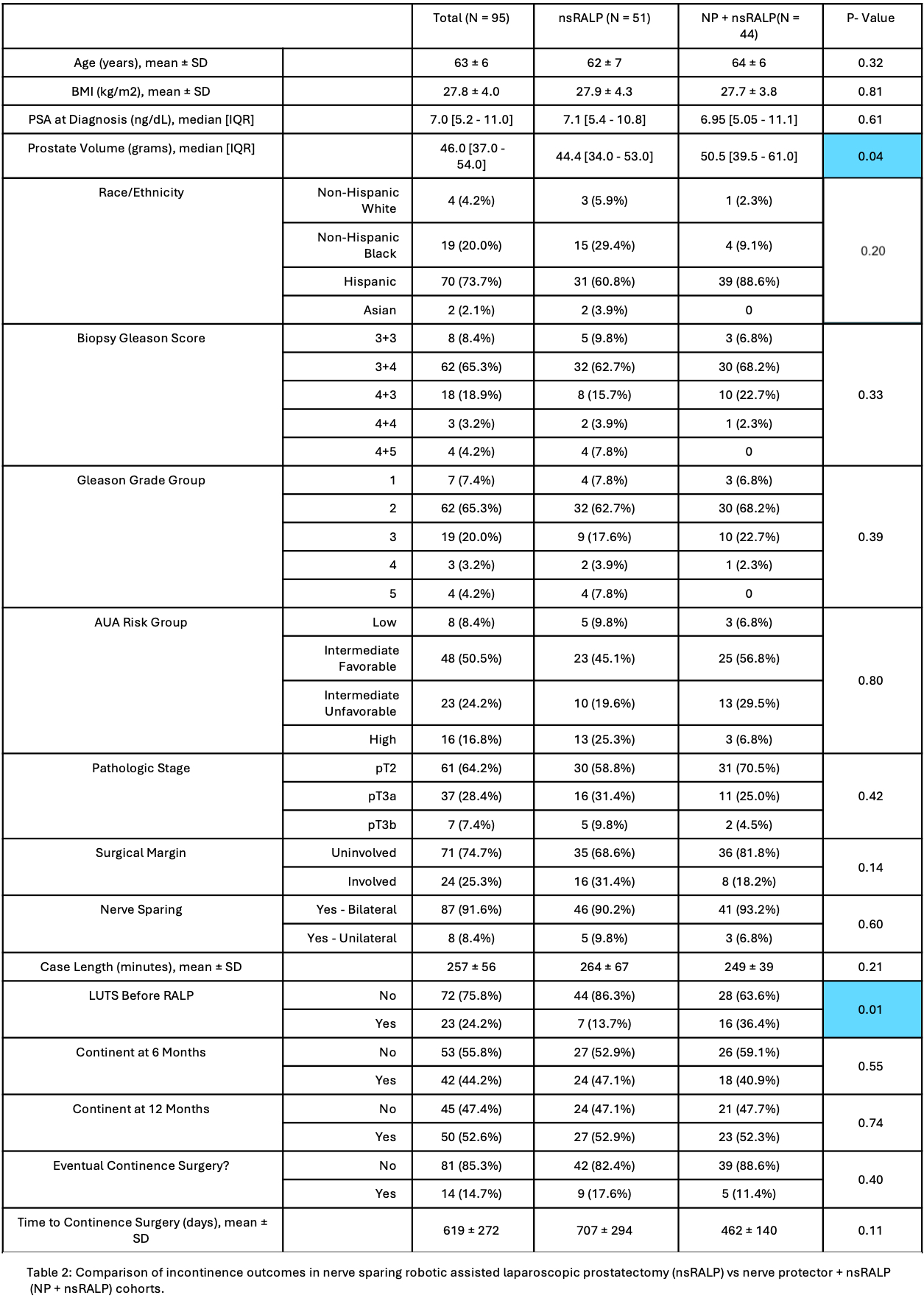
RESULTS: 91 and 95 patients met inclusion criteria for ED and incontinence analyses. NP+ nsRALP patients had larger median prostate volume in both ED (45.8 grams vs 54.7, p=0.04) and incontinence (44.4 grams vs 50.5, p=0.04) analyses. Rates of ED between nsRALP vs NP + nsRALP cohorts were comparable at 6 months (91.7% vs 93%, p=0.81) and 12 months (85.4% vs. 88.4%, p=0.67). Rates of incontinence between nsRALP vs NP + nsRALP cohorts were comparable at 6 months (52.9% vs 59.1%, p=0.55) and 12 months (47.1% vs. 47.7%, p=0.74).
CONCLUSIONS: Use of NPs during nsRALP did not improve rates ED or incontinence. A randomized controlled trial is warranted to classify the utility and efficacy of NPs in patients undergoing RALP.
Back to 2026 Abstracts


